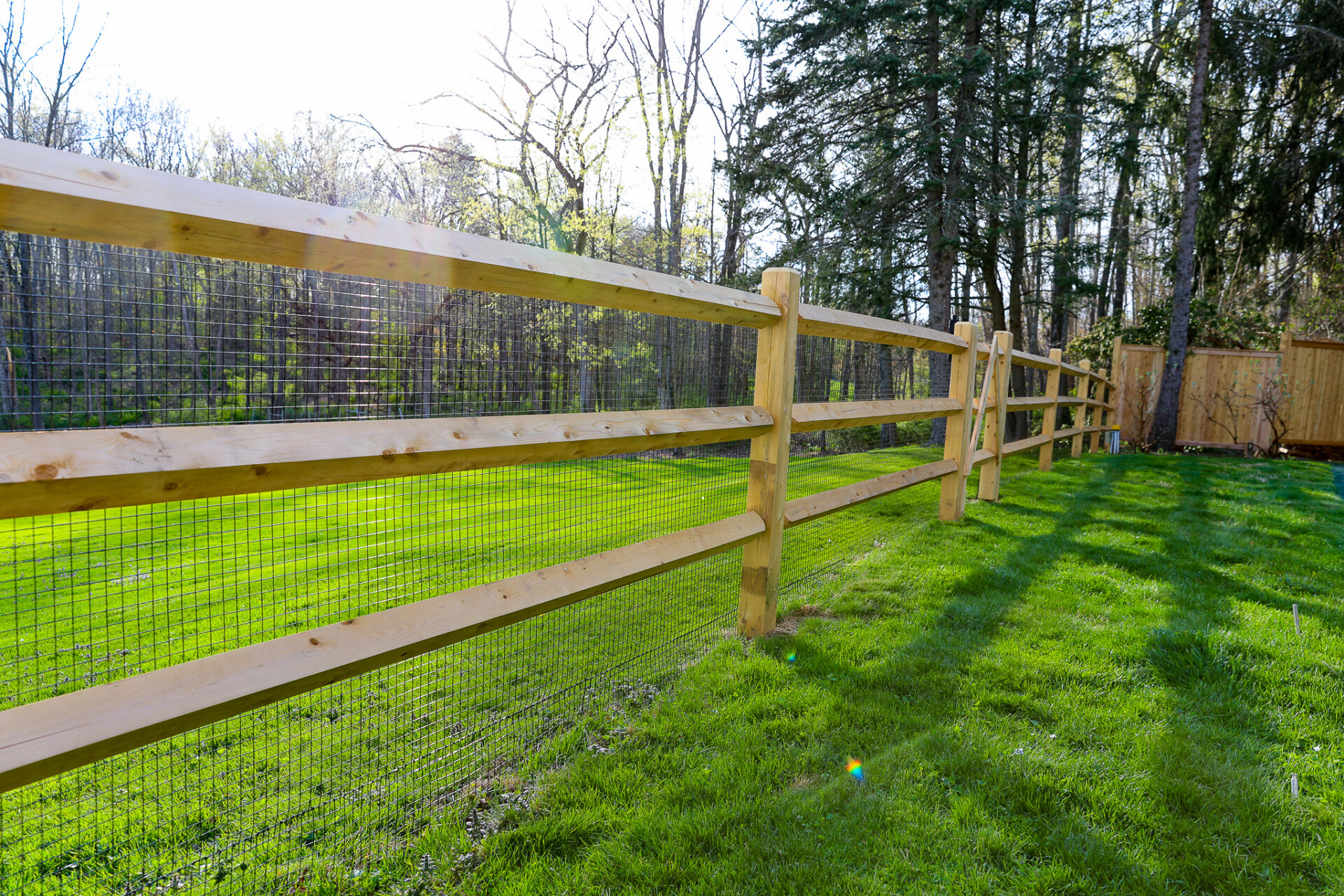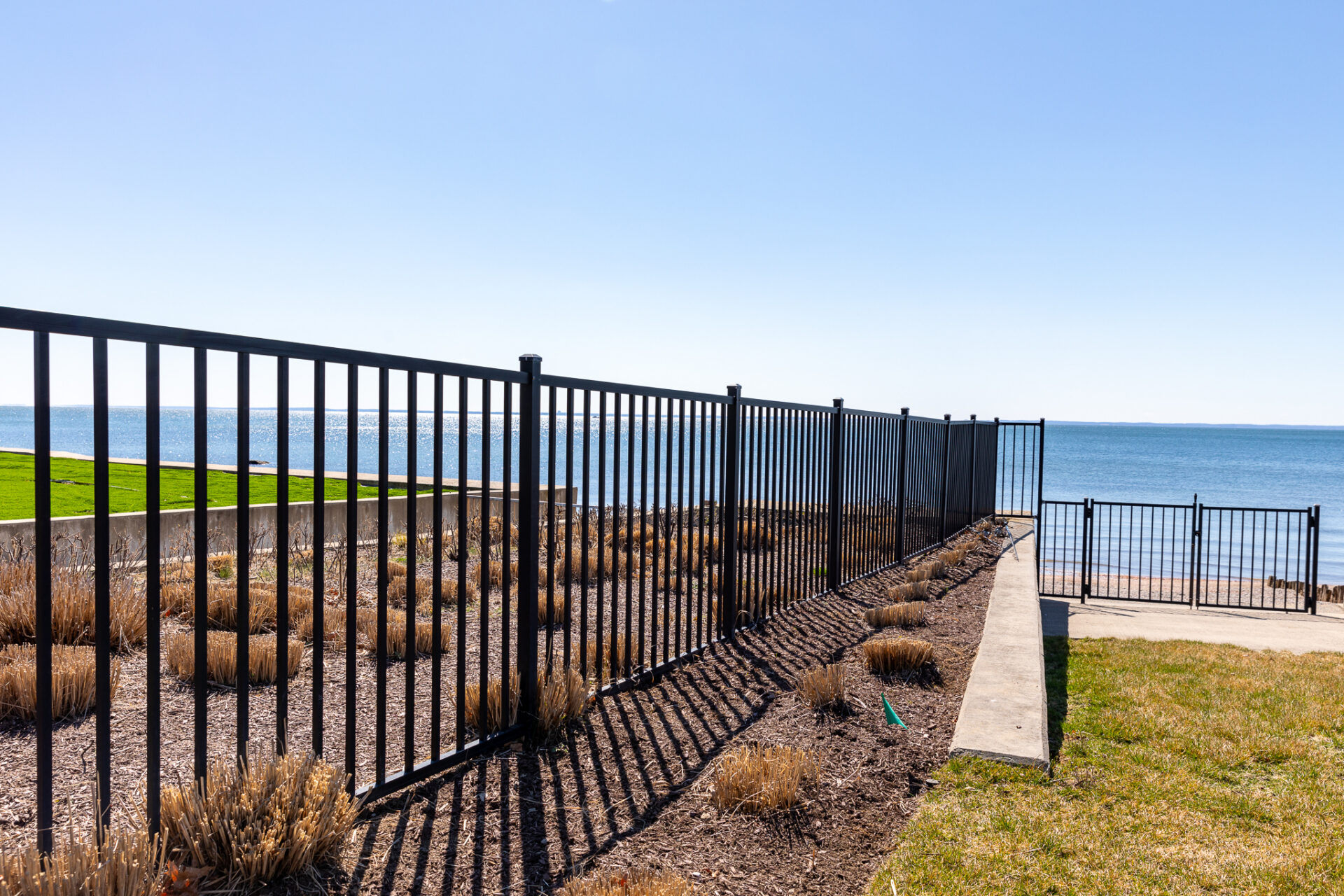
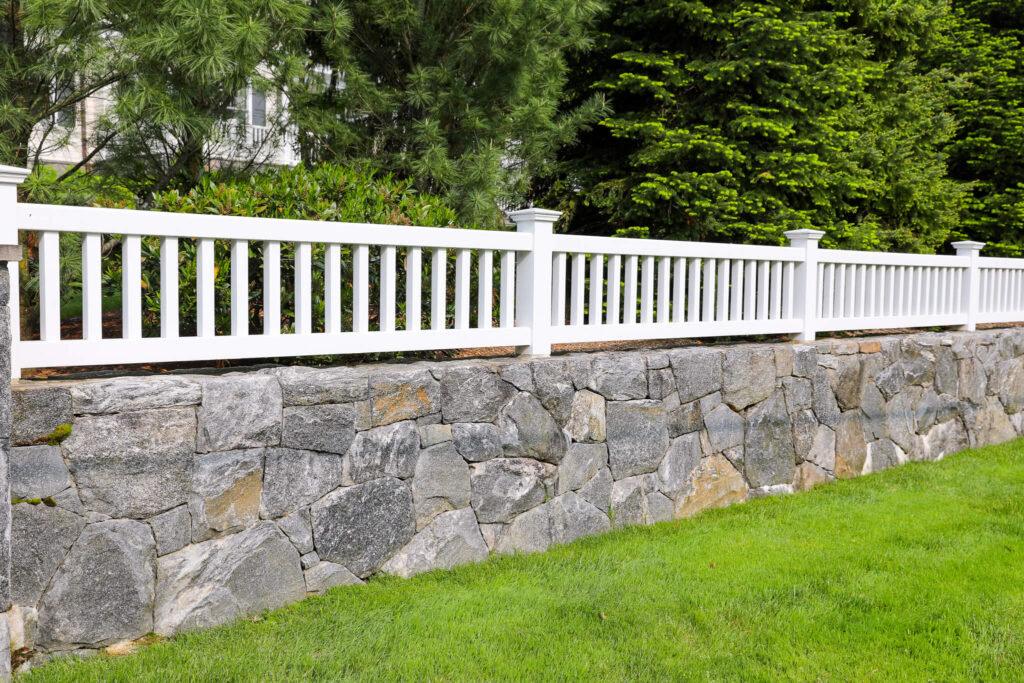
Slopes and irregularities of the landscape necessitate innovative ways to manage traffic and prevent erosion. Retaining wall fences are an effective way to address both structural needs and boundary requirements in a single installation. These versatile structures combine earth retention with fencing capabilities to maximize ground control and functional aesthetics.
A retaining fence wall is an intentional structural element that acts as a fence to control access (physical barrier) and a retaining wall to support uneven topography (earth retention). They’ve become very popular among homeowners because they can be used to solve two common problems on your property at the same time. They create a visually appealing outdoor space from sloping or multi-level areas, and they provide clearly defined boundaries.
In this guide, we delve into all things retaining wall fence installations. We explore the various types and styles (depending on your terrain), important project considerations to keep in mind, and design ideas to help inspire your project.
What is a Retaining Wall Fence?
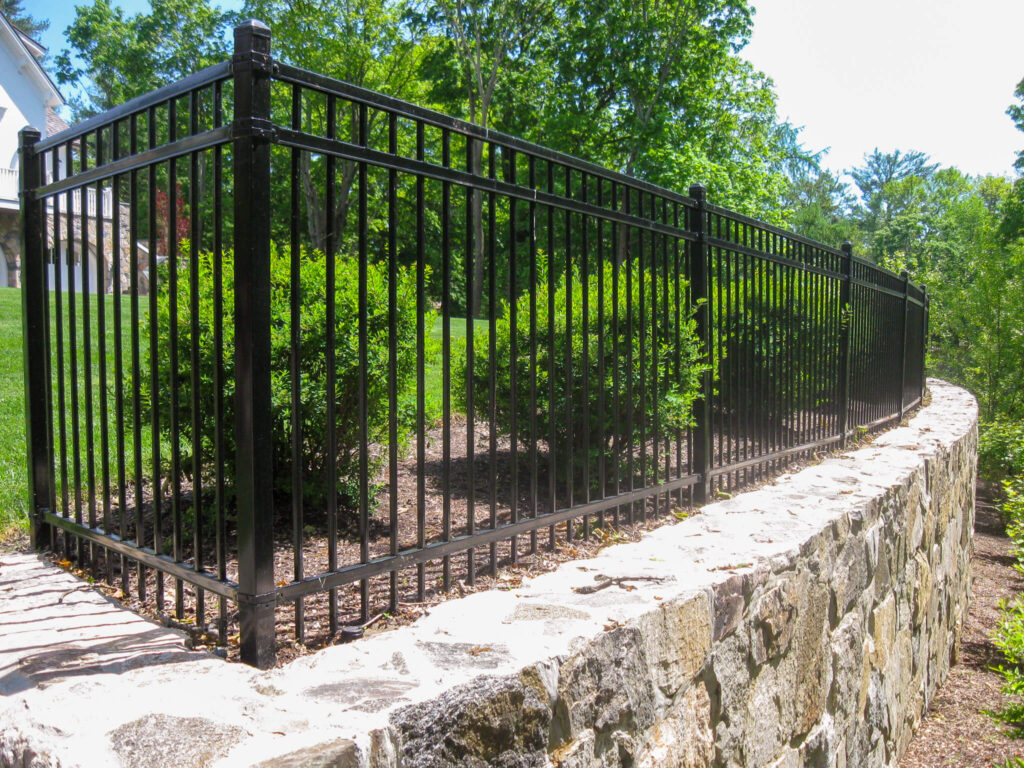
A retaining wall fence combines the functionality of a retaining wall and fencing in one cohesive structure. The retaining wall portion of this type of project serves as an engineered wall system to hold up the ground (preventing erosion) on sloping land. The fencing aspect of the wall can add vertical dimension to your yard, creating additional privacy, security, and/or defining your property lines for aesthetics.
In doing so, the retaining wall meets all of your grading and soil stabilization issues, while the fence serves as a defined perimeter and an added visual element that ties into your yard’s design. Retaining walls are most effective when you have significant elevation differences on your property or space is limited enough that it would be cost-prohibitive to install two separate structures.
A retaining wall fence creates defined areas in your yard while maintaining the integrity of the soil. Additionally, because both components are part of one wall, you will have the option to use similar materials and design styles to achieve a cohesive look throughout your entire property.
Types of Wall Fencing
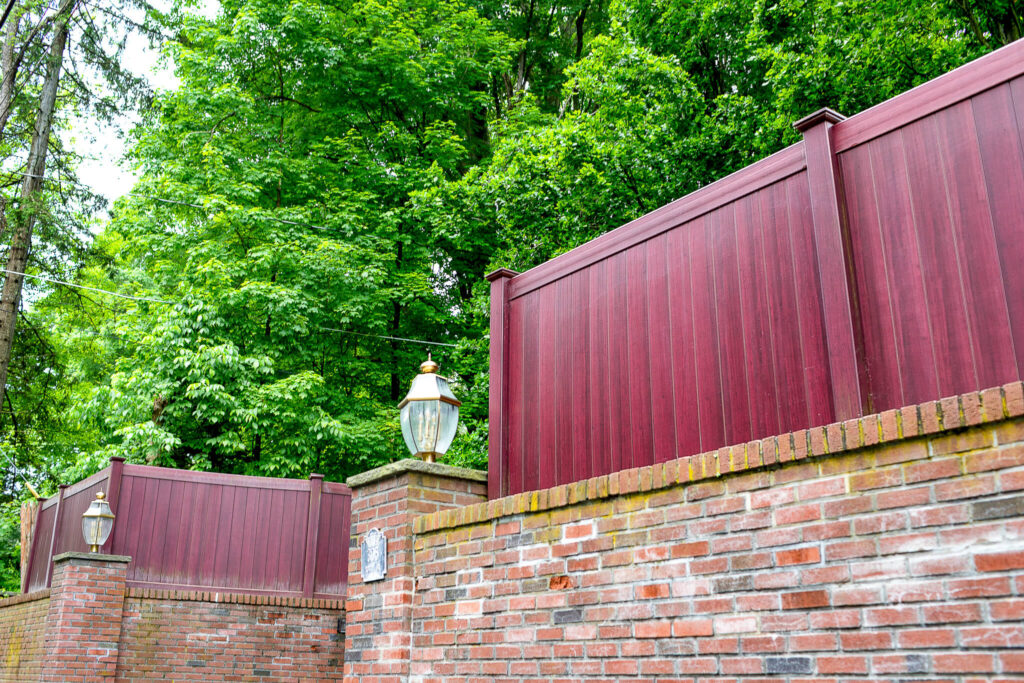
There are many options when it comes to choosing a style for your retaining wall fences, depending on what your land needs and the structural demands of your landscaping. Not every type of wall fence is a “retaining” type, so understanding the differences will allow you to narrow down which direction is best suited for your unique terrain and design intentions.
Structural Retaining Wall Fences
The structural retaining wall fence has both a retaining wall and a fence integrated to manage heavy volumes of soil and prevent erosion from the slope of your land. The retaining wall provides lateral support for the soil’s weight and facilitates the passage of water through the wall. The fence is then installed either on top of or directly into the retaining wall. These types require engineering and permits to ensure proper soil retention.
Tiered Retaining Wall Fences
Properties with severe grade changes may benefit from using tiered retaining walls, which have fencing integrated into each tier. By breaking down an extreme elevation change into smaller sections, this method makes managing a large change in elevation easier to accomplish. In addition to creating visually interesting spaces by having multiple tiers of fencing and/or walls with different materials or styles, it also allows you to develop a series of terraced spaces.
Freestanding Wall Fences
Freestanding wall fences are more decorative fences that appear similar to a retaining wall; however, they retain very little (if any) soil. The wall portion of a freestanding wall fence provides a visual barrier and architectural interest to flat or very gently sloping lands. The wall portion is usually lower than its retaining counterpart and is utilized strictly as a design element or the base of the fence above.
Hybrid Retaining Wall Fences
With hybrid designs, you can combine a functional retaining wall section where needed with freestanding elements that maintain continuity with the ground. This creates continuity in your boundary treatment while addressing structural and aesthetic requirements. The transition between functional and decorative sections maintains a cohesive look throughout your property line.
Project Considerations Before You Build
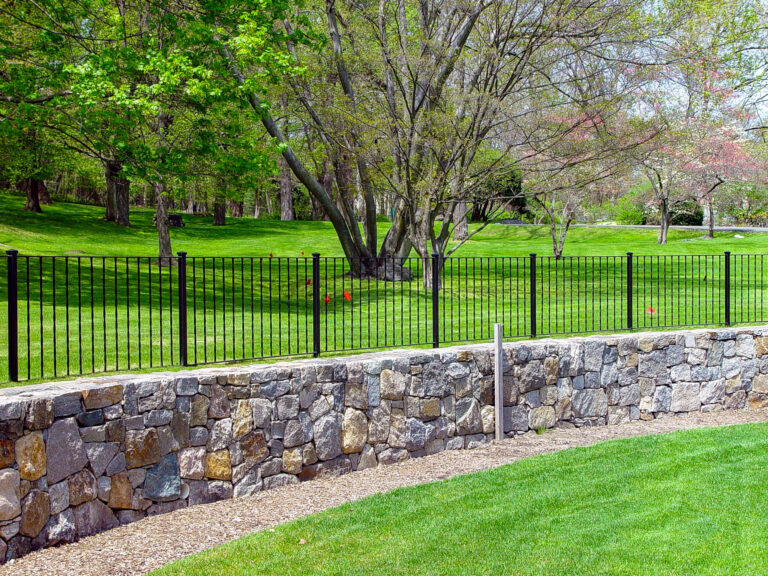
Planning a retaining wall fence requires careful evaluation of multiple factors that impact both functionality and aesthetics. Your property’s unique characteristics and your specific goals will guide decisions about materials, design, and installation approach. Consider these key elements before breaking ground on your project.
- Height and scope: Determine the overall vertical extent (total height) of the combined retaining wall and fence sections. Walls exceeding 4′ typically are subject to local permitting and engineering because of increasing soil weight and public safety concerns.
- Design objectives: Define what you want the retaining wall fence to achieve, such as security, visual concealment, aesthetic appeal, etc. The design objectives will greatly influence the type(s) of materials chosen and the proportion of solid wall to open fencing.
- Material selection: Select materials that complement the style of your home and will last under normal climate conditions. There are many successful combinations of wall and fencing materials available; some examples include stonewalls with metal fencing, concrete block walls with wooden paneling, brick walls with ornamental iron fencing, etc.
- Drainage requirements: Hydrostatic pressure from water can build up against a retaining wall, causing structural damage if it does not have adequate drainage provisions. Drainage solutions should be included in your design, such as weep holes, gravel backfill, or French drains.
- Site conditions: Assess the soil type, slope angle, and existing grade variations at your site. These will affect the amount of engineering required and/or the depth of the foundation necessary for stability.
- Weather and climate exposure: Take into consideration freeze/thaw cycles, rainfall intensity, sunlight exposure, and other environmental factors that can negatively affect the durability of the selected materials. Coastal sites require extra considerations for salt spray and wind loads.
- Property line boundaries: Establish and document the exact location of the boundary between your property and adjacent properties prior to construction commencing. Violation of setbacks or encroachments onto adjacent property can result in removal and reconstruction at additional cost to the homeowner.
- Costs/budget and timeline: A retaining wall fence can be an expensive project with large variability in costs depending on the type of materials used and the complexity of the design. Account for costs associated with the original installation and those for maintaining the structure over time.
- Accessibility for installation: Assess the availability of equipment to reach the area where the structure will be installed. Availability of access through gates, slopes, and overhead clearance will greatly affect the cost of labor to set the materials.
- Future landscape plans: Consider how this wall/fence section will fit into your broader landscape design plan. Coordination with planned patios, gardens, and other hardscapes will provide a comprehensive outdoor design.
Retaining Wall Fence Design Ideas
The best retaining wall fence designs balance structural integrity with visual impact that complements your home’s architecture. These design ideas offer examples of how different combinations of wall and fence materials can transform your property’s character.
Classic Elegance with Lattice
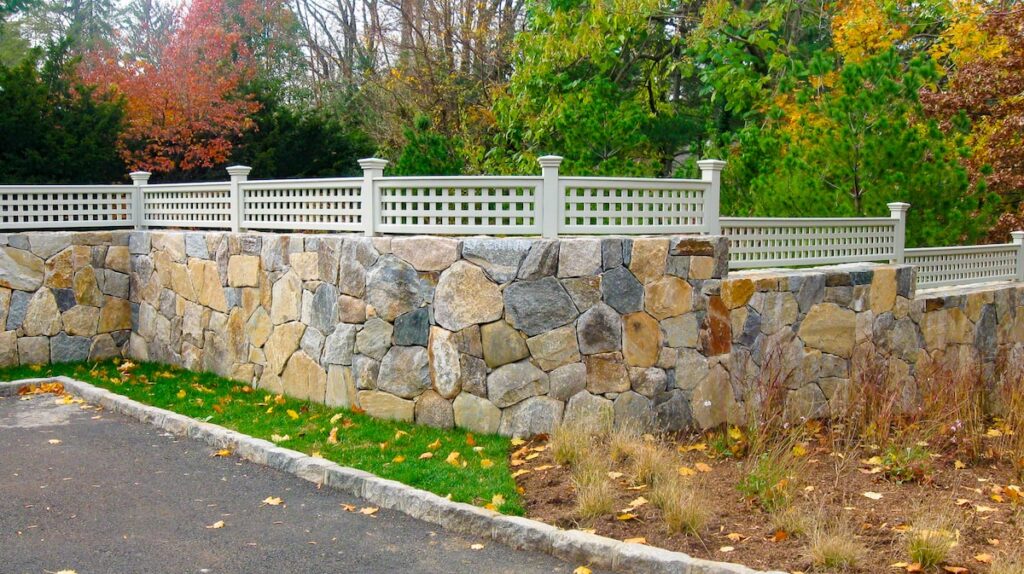
White square lattice fencing rises above rugged fieldstone to create an unexpected marriage of formal and natural elements. The contrast works beautifully, as the earthy texture below meets crisp geometry above for a look that feels both grounded and refined.
Rustic Simplicity with Post and Rail
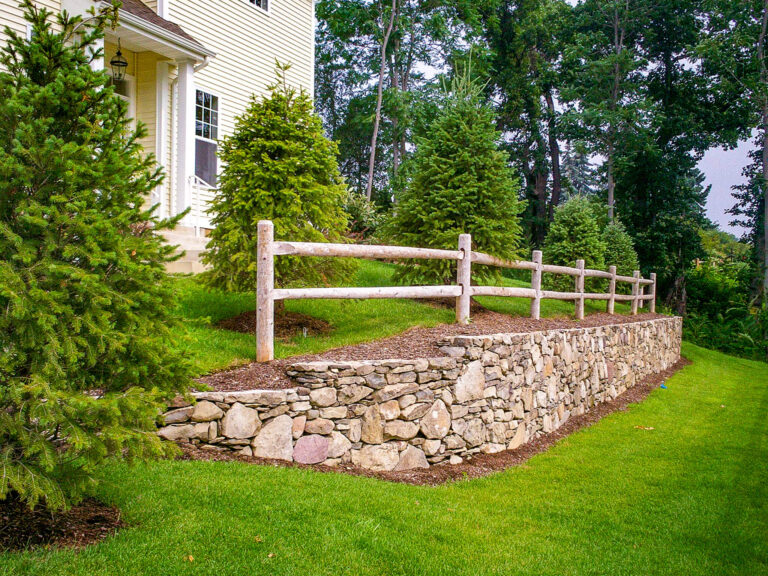
Sometimes the smartest solution is also the most budget-friendly. Post and rail wood fencing is installed atop dry-stacked stone to deliver safety and boundary definition without excessive material costs, proving that practical protection can still look naturally beautiful.
Grand Entry with Stone and Wood
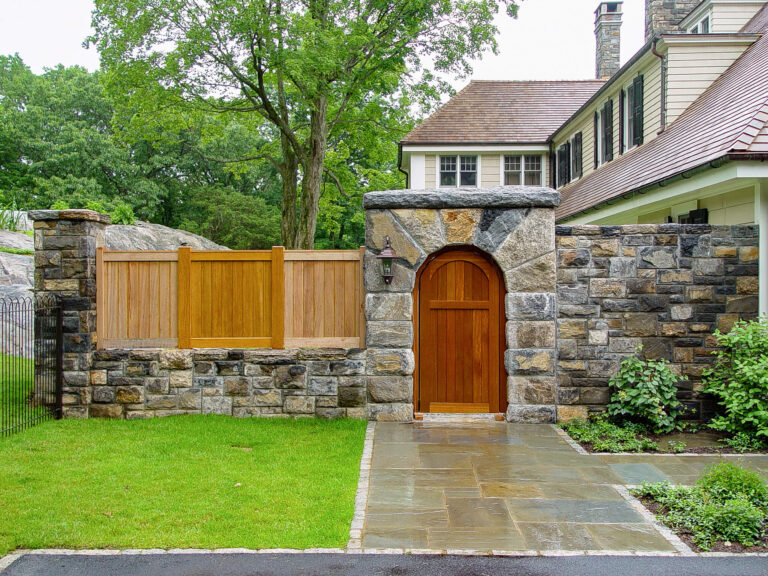
Stone masonry archways paired with custom wood gates and fence panels create a statement entrance with Old World character. The dimensional stonework provides structural support while rich wood tones add warmth and privacy where desired.
Refined Lines with Ornamental Metal
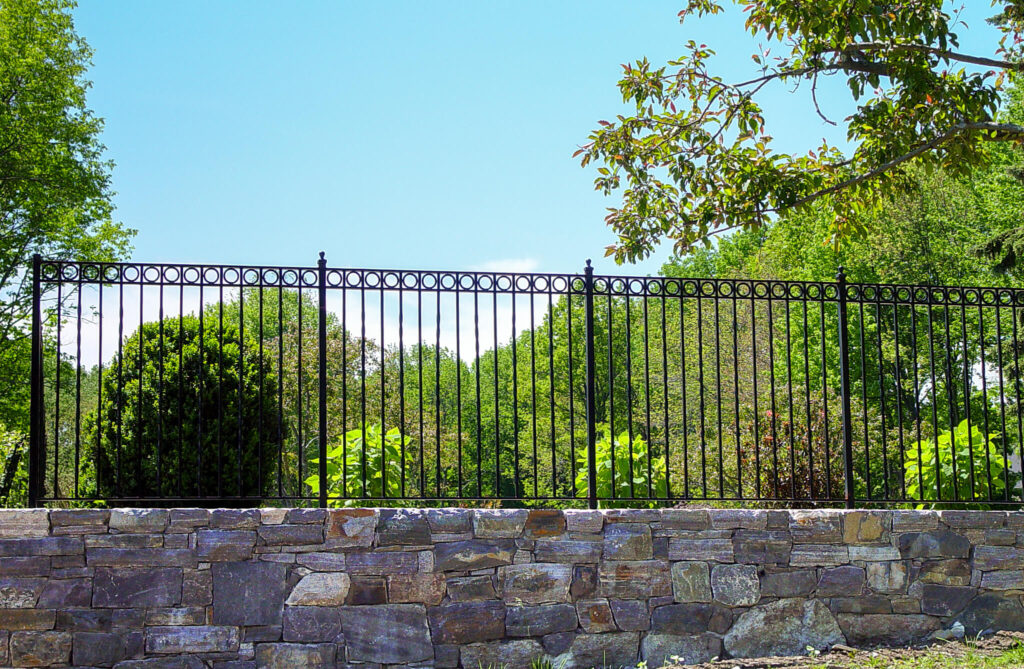
Vertical metal pickets bring contemporary precision to the organic texture of stacked stone. This pairing delivers security and sightlines simultaneously, proving that functional boundaries can maintain visual openness across your landscape.
Estate-Level Drama with Decorative Ironwork
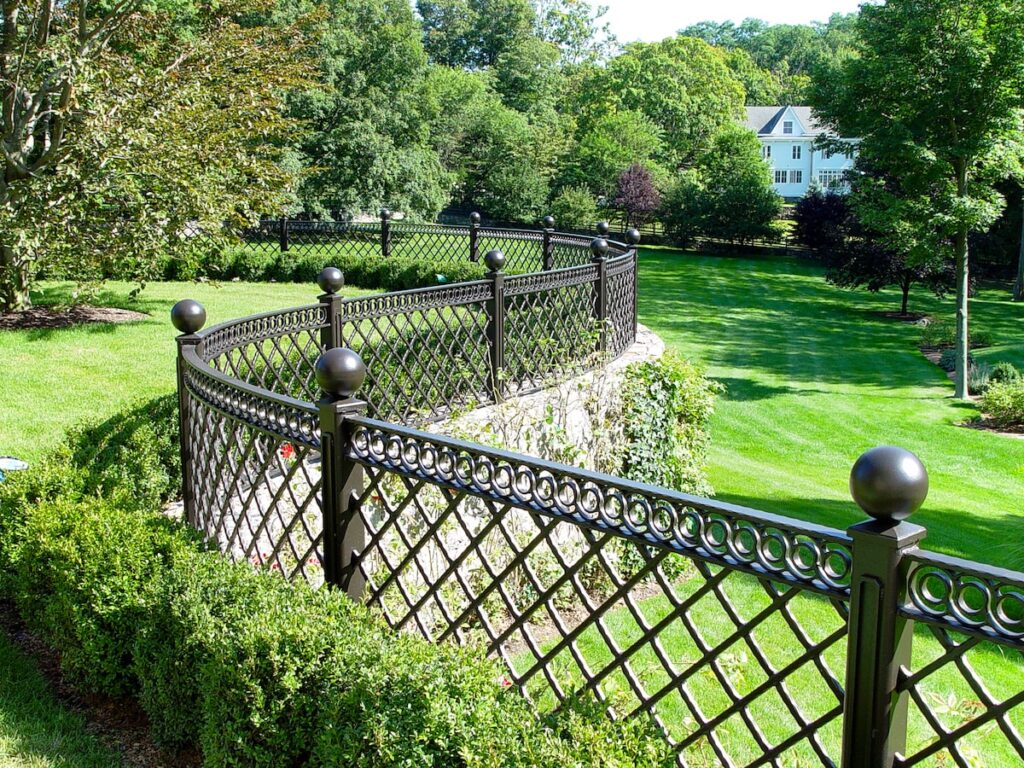
Ornamental metalwork transforms this curved stone retaining wall into a work of pure craftsmanship. Geometric patterns and ball finials add layers of detail that reward closer inspection, while the flowing wall line follows the natural grade with graceful movement.
Start Your Project with Garon Fence
Retaining wall fences require expertise in both structural engineering and custom fabrication to deliver results that last. Garon Fence specializes in designing and building these dual-purpose structures using all types of materials, including stone, metal, and wood. Every project is custom-designed and fabricated in-house to meet your property’s specific terrain challenges and aesthetic vision. Start your project with a free consultation. Get in touch to learn more.

President of Garon Fence, Matt Prato, has transformed the family-owned business into a self-sustaining, independent, and thriving company. He brings expert knowledge in all things involving fencing, gates, and access solutions, shaped by years of hands-on installation and custom fabrication. He is a home improvement and outdoor design expert with decades of experience working on residential projects, and he advises homeowners on practical upgrades for gates, fences, railings, and outdoor installations.